Pitch Impregnation of UHP Graphite Electrodes
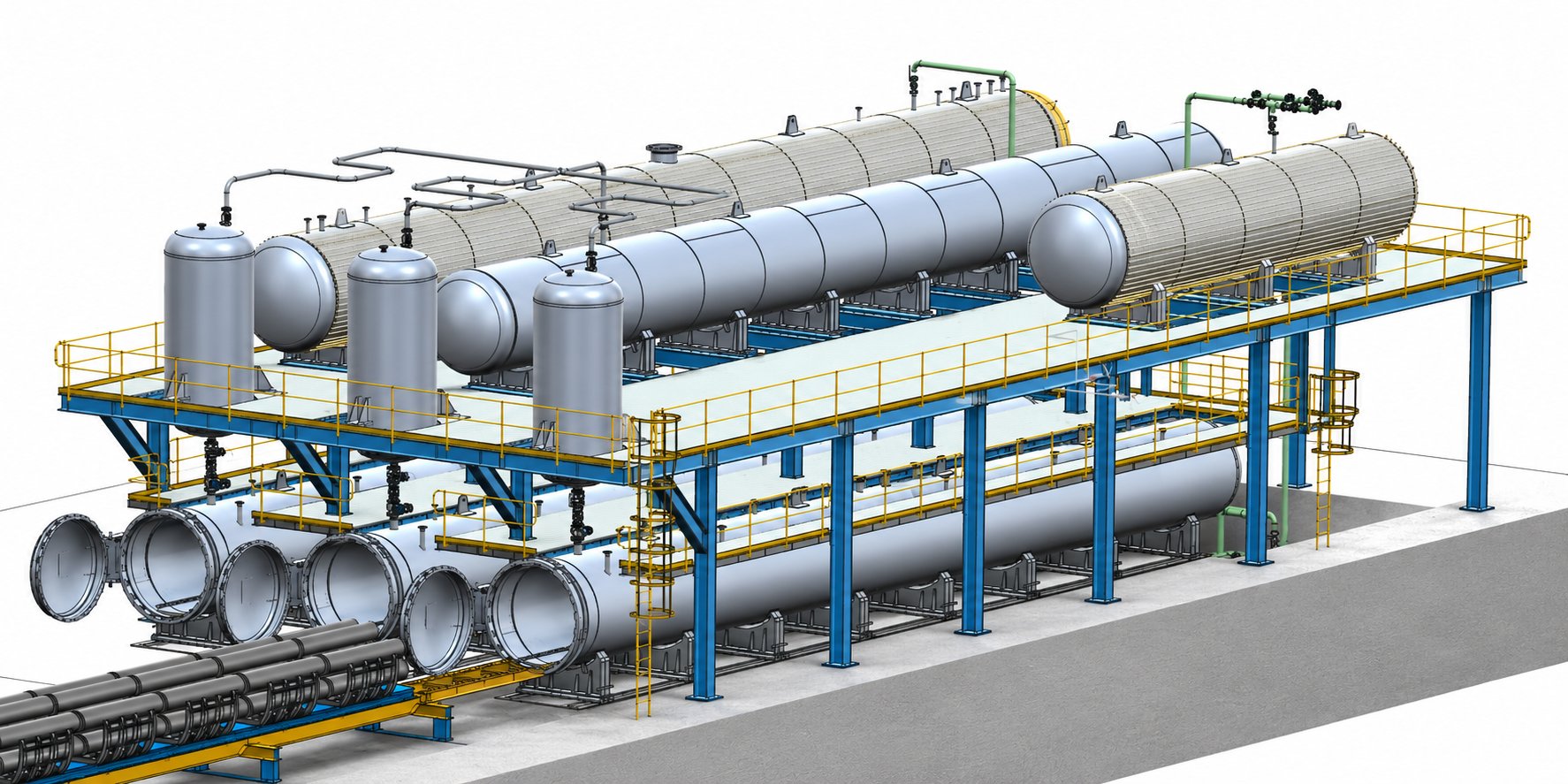
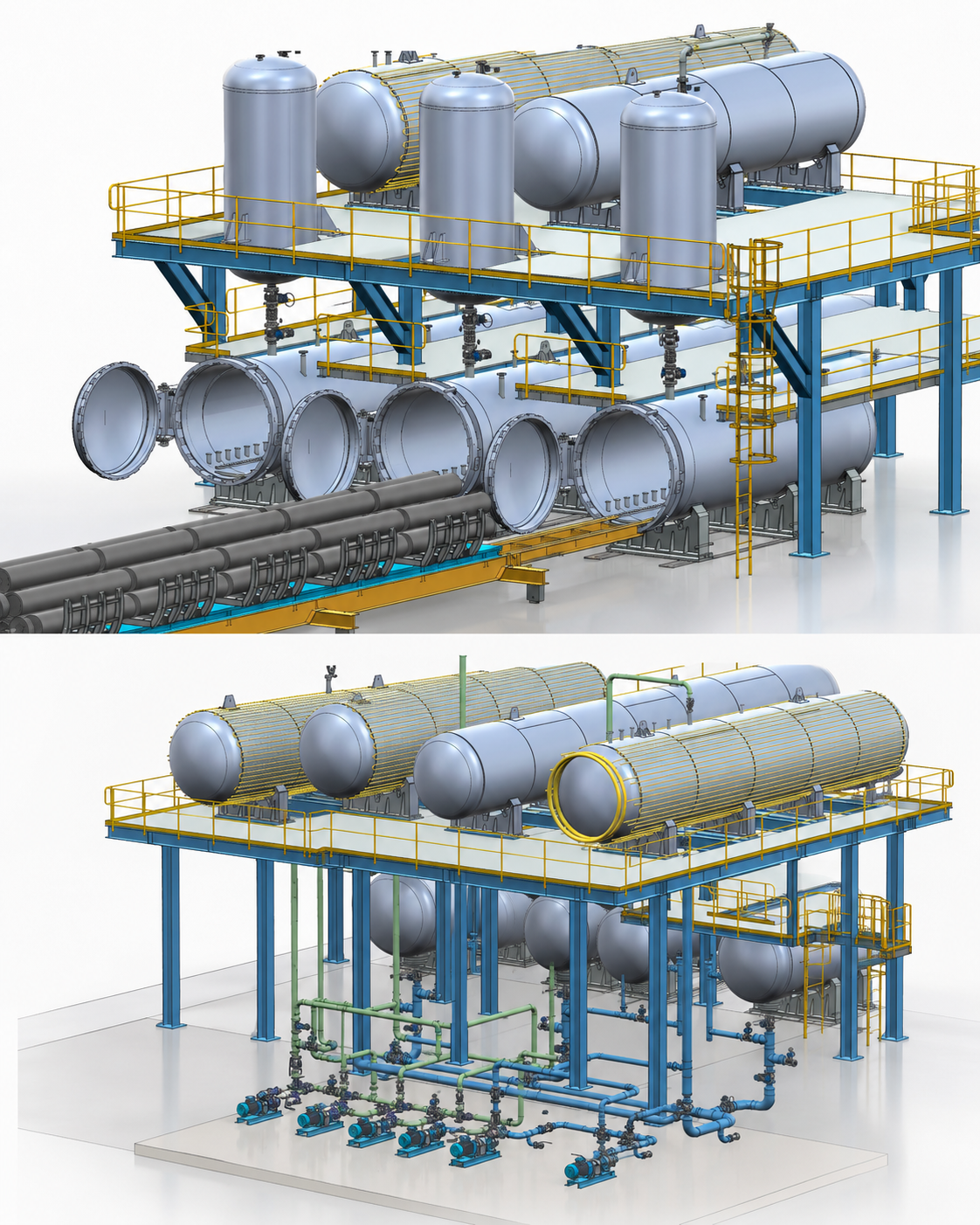
We provide advanced technological solutions for the impregnation of UHP graphite electrodes and pins, aimed at increasing density, mechanical strength, and the stability of the final product’s operating performance.
Impregnation systems ensure deep and uniform pitch penetration into the porous structure of the electrodes, reducing open porosity, increasing bulk density, and improving the electrical and mechanical properties of the products.
Compared with traditional solutions, modern automated impregnation systems improve process repeatability, reduce raw material losses, optimize energy consumption, and provide a higher level of industrial safety and environmental control.
These advantages enable UHP graphite electrode manufacturers to improve product quality, reduce production losses, lower CAPEX and OPEX, and remain competitive in the rapidly evolving carbon and graphite industry.
Our Approach
Our approach allows for the selection of the optimal impregnation process concept depending on the production philosophy, required capacity, level of automation, safety requirements, and environmental systems.
Two main process options can be applied: cold-in/cold-out and hot-in/cold-out. In the cold-in/cold-out concept, electrodes are loaded and unloaded at a lower temperature, which simplifies product handling, improves operational flexibility, and reduces requirements for handling equipment and safety systems. However, the overall process cycle may be longer due to the need for additional heating and cooling of the products.
The hot-in/cold-out concept involves loading and unloading products in a heated condition. This approach helps shorten the process cycle, reduce heat losses, and increase line productivity, especially in large-scale UHP electrode production. However, this concept requires a more advanced handling system, temperature control, industrial safety measures, and environmental protection systems.
Therefore, the selection of the impregnation concept should be made during the technological development stage of the project, taking into account the production program, shop layout, product quality requirements, CAPEX / OPEX, and the long-term operational strategy of the plant.
Key Advantages of Impregnation Technology
- Consistent high product quality
- Deep and uniform pitch penetration
- Increased bulk density of electrodes and nipples
- Reduced open porosity
- Improved mechanical strength and performance stability
- Enhanced electrical and thermal properties
- Lower raw material losses
- Optimized pitch consumption
- Reduced rework and production rejects
- High process repeatability
- Low operational labor costs thanks to a high degree of automation
- Optimized heating, pressure and vacuum control
- Flexible process configuration: cold-in/cold-out or hot-in/cold-out
- Shorter cycle time depending on the selected process concept
- Low maintenance costs
- High environmental and safety compliance
- Advanced control of emissions, pitch fumes and process safety systems